Categories News

Ultimate Alfresco Area

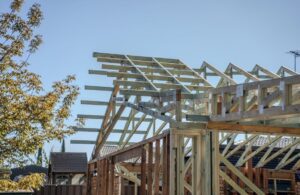
A new statement alfresco area is currently under construction that will seamlessly connect the client’s beautiful home to the sparkling pool. This will be the ultimate space for entertaining and making unforgettable memories!

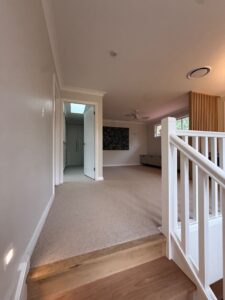
Internally we have modified the existing ceiling and replaced with raked ceilings adding height to compliment the existing kitchen / living space renovation.

Look at the WOW factor this has created!

Categories News

Master ensuite and walk in robe renovation.

By utilising an adjacent spare room, we restructured the layout to create a spacious ensuite and walk-in wardrobe for our clients. The existing built in wardrobe was updated with new joinery to now feature a his and hers design.

Windows were removed and replaced. With our master bricklayer Pete on the job, the transformation is seamless!

The design was meticulously planned to ensure it accommodates accessibility needs.

Categories News

Client Testimonial

Client Testimonial

We pride ourselves on Genuine Service & Quality Workmanship.

Categories News

Removing internal walls

Do you know there is a high chance that if you remove an internal wall that your roof and ceiling will fall in? Those internal walls are commonly load bearing and hold your roof up.

It can often be great to remove or move some internal walls to open your home up and create more space but you need to engage an experienced professional.

The photo here gives you a bit of an idea, in this example you can see the large steel beams just installed in the roof cavity, beams and bracing etc.

If you need professional advise from a home renovation expert Spannenberg and Son can help.

Categories News

PRIME COSTS

The cost of every single fitting and every single finish is almost never known at the quotation stage or contract stage and so the Quotation or Inclusions Schedule will include Prime Costs and Provisional Sums. 

One of the reasons that the cost of absolutely everything is usually not yet known is that not everything has been finally selected. You know you’re going to have taps – in the kitchen, in the bathrooms, in the washrooms and elsewhere – but you don’t know which taps you’re going to have. The same goes for light fittings, switches, sockets, stoves, door furniture, and a whole host of other things. A tap can be a low-cost item or it can cost a lot of money. The same is true of almost everything else on that list, including a whole host of other things. If the actual fittings and finishes haven’t yet been selected, they can’t yet be accurately priced, either. So they’re included in the Inclusions Schedule as a Prime Cost with a specific dollar sum allocated to them. That sum may be the amount that is finally spent or it may not. Prime Costs, therefore, are the sums allowed for items that will be present but have not yet been chosen.

Take bathroom fittings, for example., including the one you sit on (or stand up to, in which case you may be under pressure to put the seat down afterwards). There’s a standard Australian version. It sells at an attractive price and in such numbers that builders get a good discount when they buy it. Let’s suppose that’s the one that’s been included in your quote, but it isn’t the one you want. You want a nicer one, that matches (because it’s part of the same designer’s suite) the curved bathtub you’ve already got your eye on (and that curved bathtub isn’t standard, either).

So you tell the builder which toilet you want. It costs $120 more than the standard one. and the builder’s discount isn’t as good, either. So, OK, you’re now buying a toilet for $150 more than the figure in the estimate. Well, that’s alright, isn’t it? I mean, what’s an extra $150 when you’re spending so much anyway?

But it isn’t just an extra $150, is it? There’s the extra $350 on that lovely curved tub and the shower screen in toughened glass doesn’t come in at the standard price, either, because the standard shower screen doesn’t fit a curved tub – and then there’s another $120 for the washbasin.

So what does all this add up to? Let’s say the Prime Cost of an item in the Inclusions Schedule is $1,000. If, when you, the customer, have chosen the actual item you want, it turns out that the cost of buying and installing that item is $1,000, that’s what you’ll pay. If buying and installing the model you choose only costs $800, the sum invoiced will be $200 less than the quote. If it costs $1,200, you’ll be invoiced for $200 more than the quote. That’s how Prime Costs work… almost.

What you also need to know is that the contract you signed will almost certainly entitle the builder to charge a margin on top of the actual cost. The margin can be 20% or 30%. So, if you choose that $1,200 item against the $1,000 allowance, the most you can be additionally invoiced is $200 for the increased cost over the Prime Cost and up to $240 as a margin on the total sum of $1,200. So, that’s the final explanation of how Prime Costs work.